


Mika on Polarstern
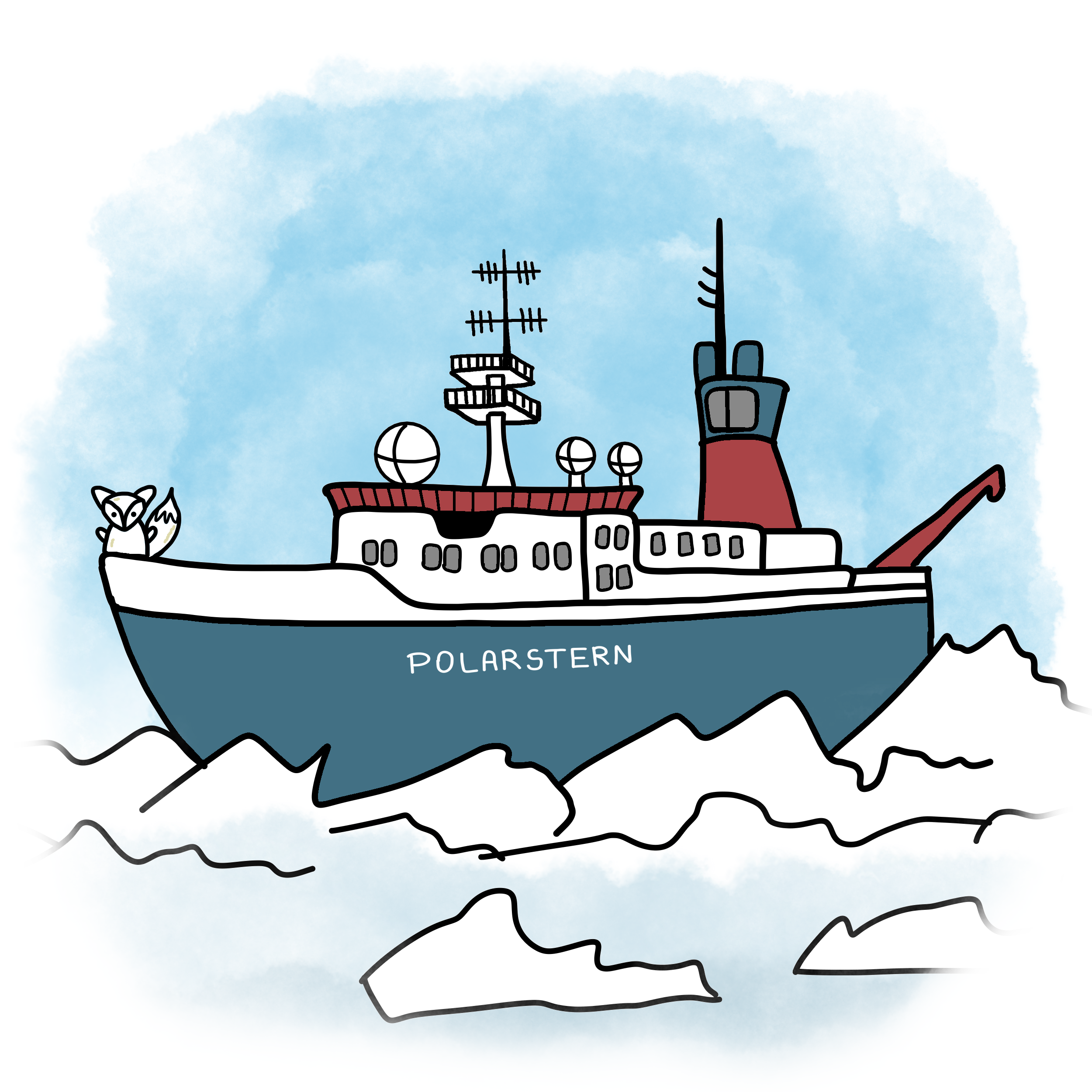
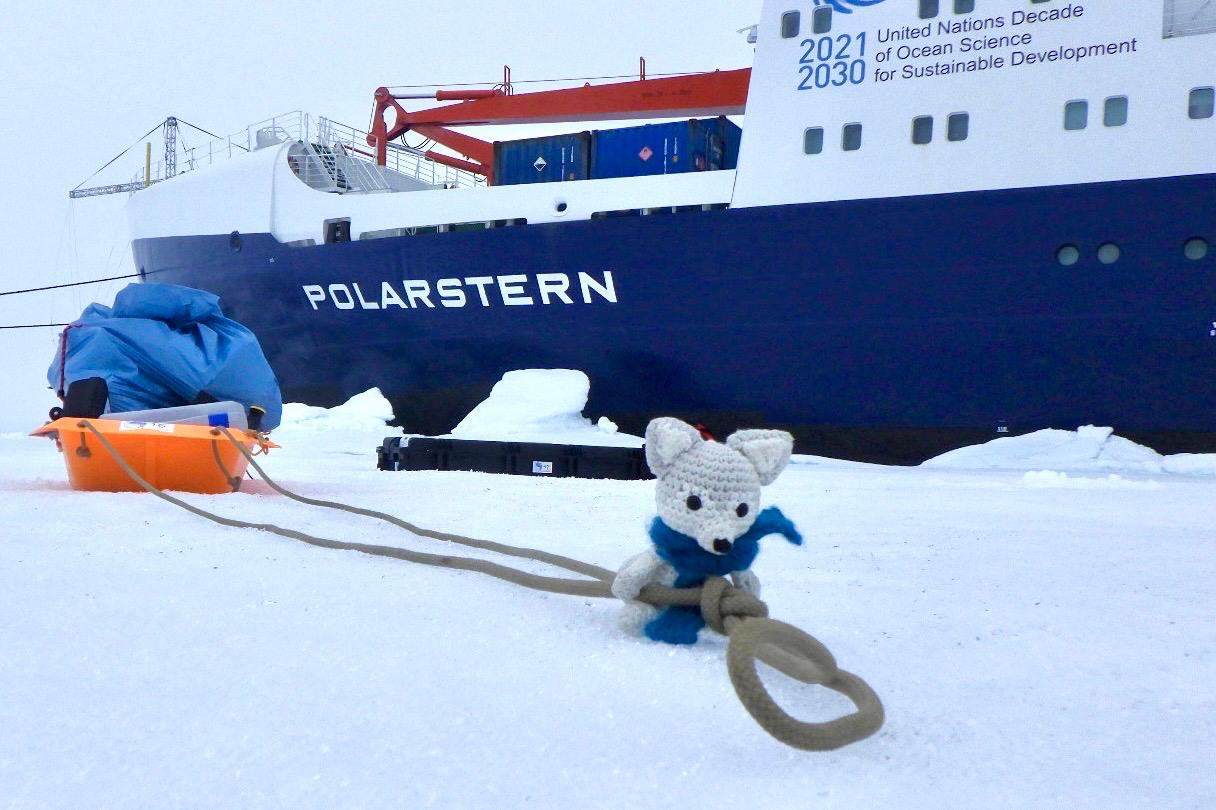
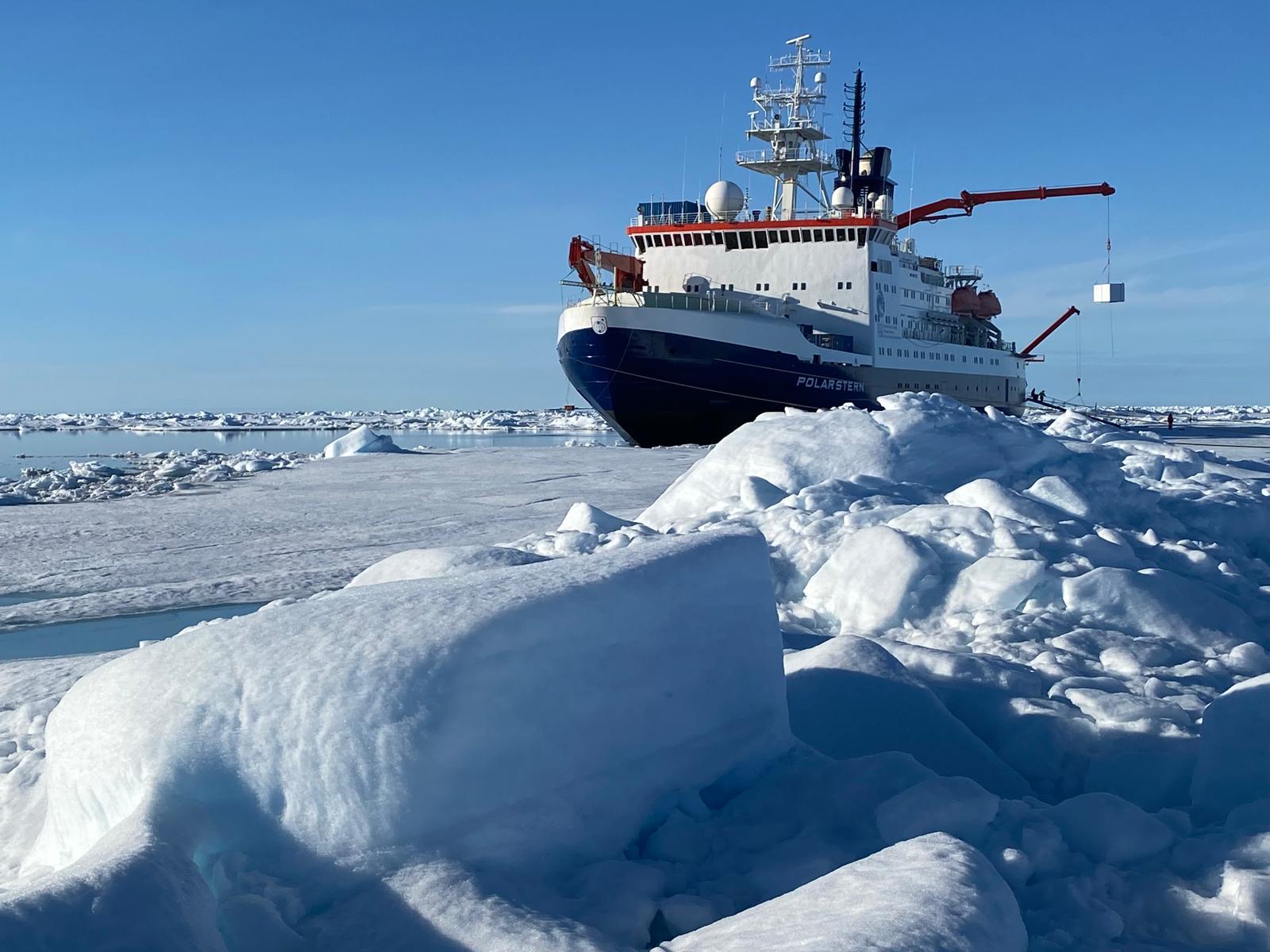
This summer, Mika traveled to the Arctic on a real research ship! The ship has a really beautiful name: “Polarstern” (“Polar Star”). When we met again after his return, I was thrilled to see him again and was bursting with curiosity. I wanted to know everything right away. “Mika, what was it like up there in the ice? It must have been super exciting!”
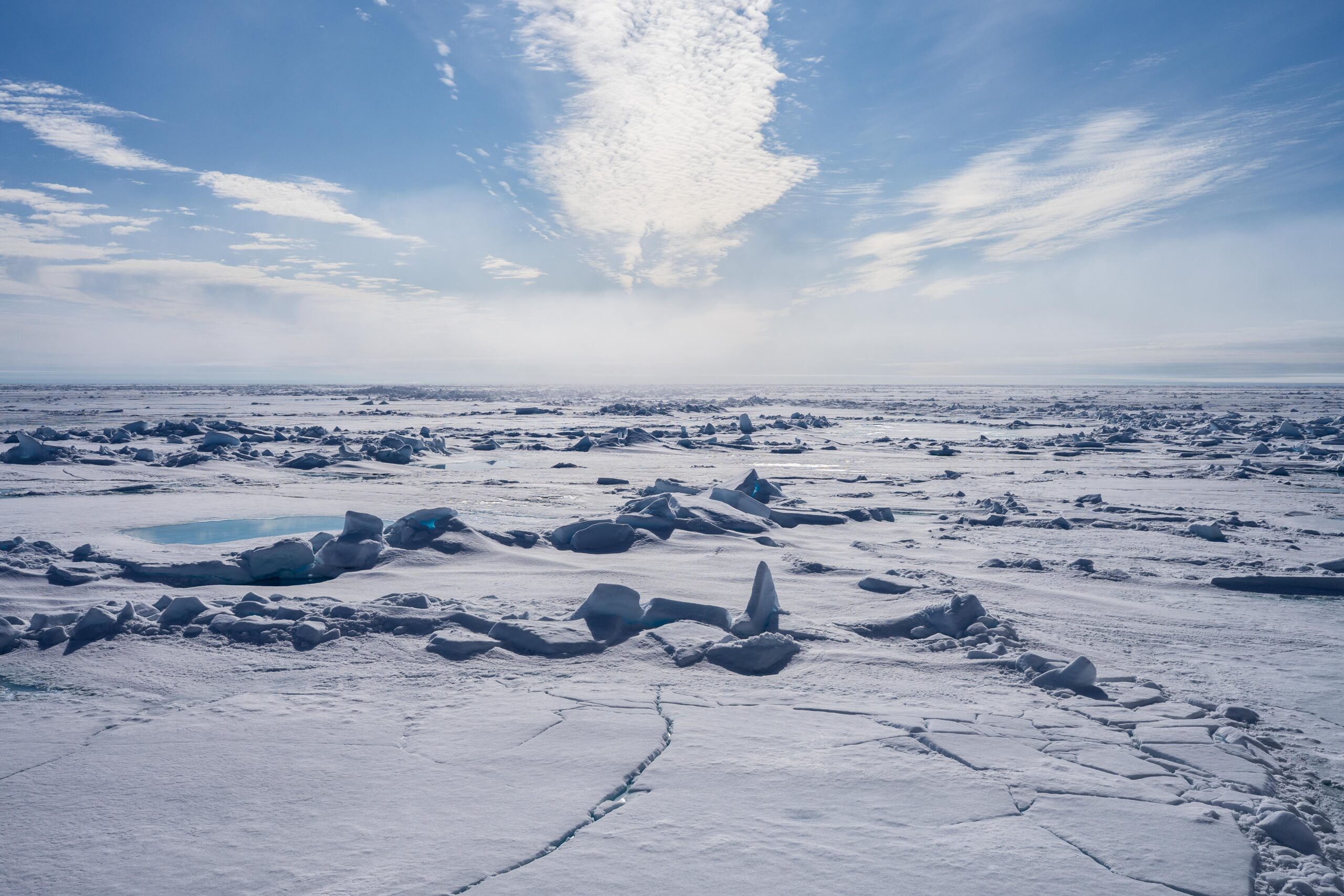
Mika grinned and nodded. “Oh yes, exciting describes it pretty well. Imagine, nothing but snow, ice, and vast emptiness everywhere.”
I couldn’t really imagine it, so I asked, “And what did you do there all day? Were you on the ship the whole time? Did you have to go out onto the ice every morning? Or were you mostly in the lab?“
Mika laughed. ”Patience! I’ll tell you everything. It was exciting, sometimes really exhausting, but really cool.”
With that, it was clear that I absolutely had to know what a typical day on a research ship in the Arctic was like.
Mika was ready to tell me everything. “The day started early. The alarm clock rang at 7 a.m., and breakfast was served at 7:30 a.m.”
Of course, I had to ask, “Why did you have to get up so early?”
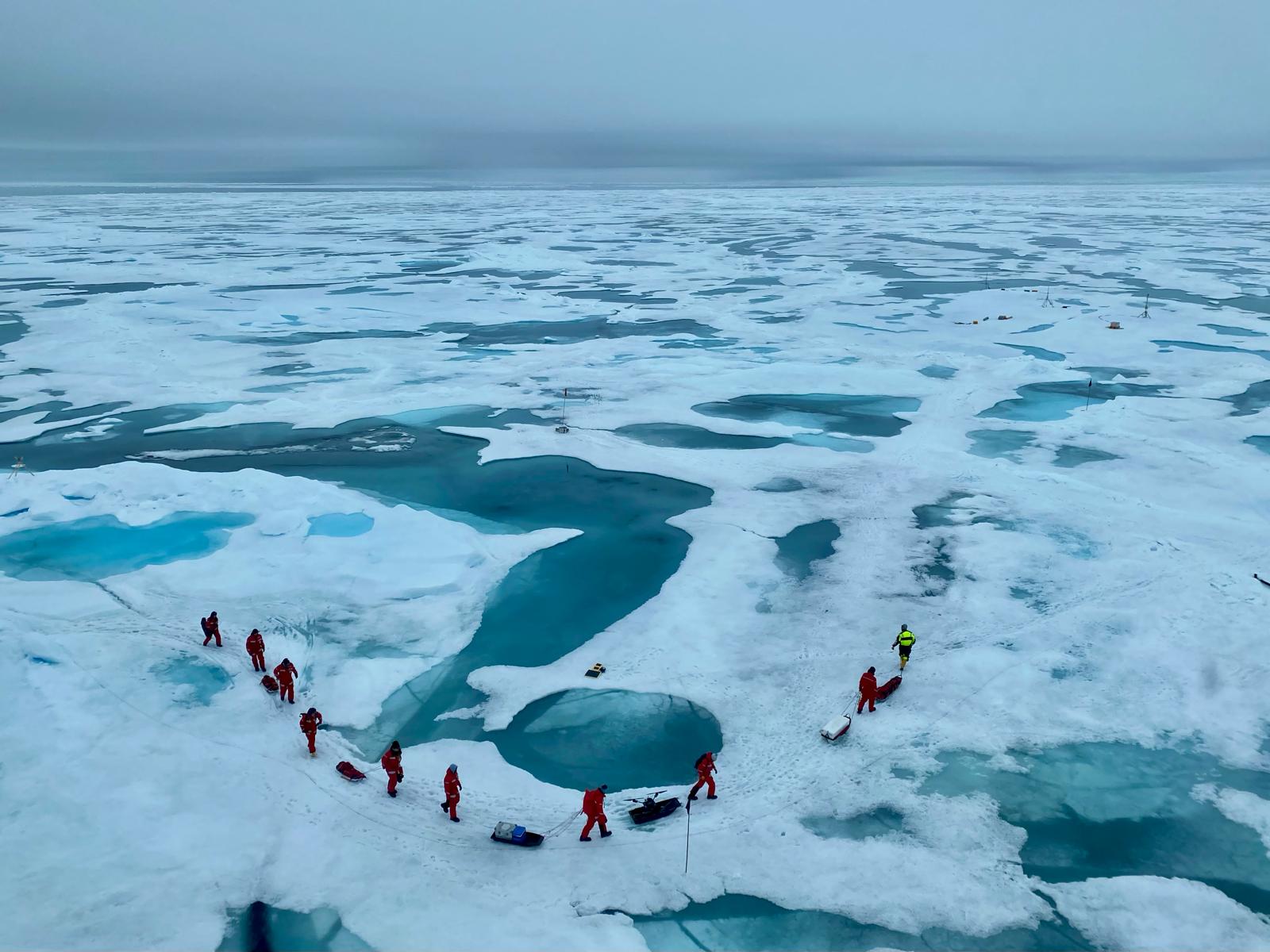
Mika grinned and said, “Because we wanted to take a lot of measurements up there, so we used every minute. After breakfast, the whole team got together. We discussed whether it was safe to go out onto the ice. Sometimes it was too thin or had dangerous cracks. But when our boss Marcel gave the green light, we could finally go out! At 8:30 a.m., we trudged out into the glistening white. Everyone on the team had a different task. Linnu took snow samples and examined the snowflakes closely under a magnifying glass.”
I was surprised: “Aren’t they all the same?”
“No,” said Mika, “each one is unique and influences the surface structure, which in turn changes how much solar radiation is sent back into the atmosphere from the snow. Max had a different task. He measured the thickness of the ice and how much meltwater was on it.”
“Why is that important?” I wanted to know.
“Because meltwater shows that it was warm,” Mika explained. “When there is a lot of water on the ice, it melts faster underneath, which also helps us understand how climate change is altering the polar region.”
Mika continued, “At 11:30 a.m., my stomach was usually empty, so it was time to go back to the ship and have lunch together. After that, we went right back out to measuring snow, sawing ice, taking photos. I always looked out for cracks in the ice because my light paws allowed me to run ahead easily. At 5:30 p.m., we had a hot meal, and at 6:30 p.m., we held a debriefing: What had we learned today? What was on the agenda for tomorrow?”
“That sounds pretty exhausting,” I said when Mika was done.
“Yes,” he smiled, “but every day we discovered something new, and that made the work worthwhile.”
“And in the evenings? Did you have any time to relax?” I asked.
“Sure,” said Mika. “And there was a lot to do.” He told me that there was even a small pool and a gym on board so that everyone could let off some steam after work.
“And what else did you do?” I wanted to know.
“We often played games in the Red Salon (our “living room” on board),” Mika explained. “Cards, board games, sometimes movies. But the best thing was standing outside on deck and watching the ship sail through the ice. The ice takes on so many different shapes and colors! And we were even allowed on the bridge and in the engine room. The ship’s crew showed us how the ship is steered and where the fresh drinking water comes from.”
I was amazed. “So you didn’t just have work to do, you also had a lot to discover!”
Mika nodded contentedly. “That’s exactly how it was.”
Lass dir den Beitrag vorlesen
Text & Photos: Linnu Bühler & Maximilian Ringel, Illustration: Patrizia Schoch, Translation: Sophie Rosenburg