
Red sky in the Arctic – How does it occur?
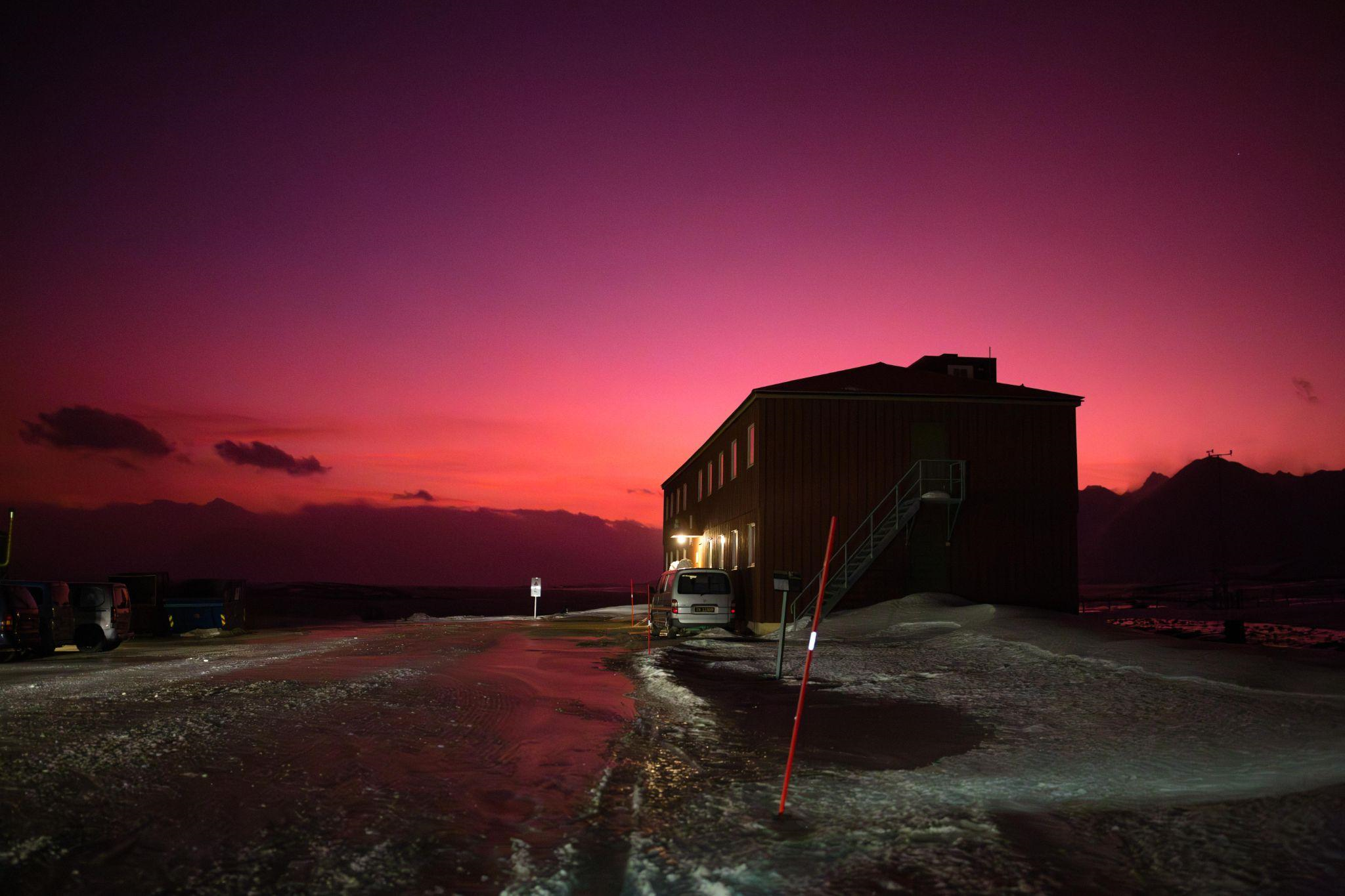
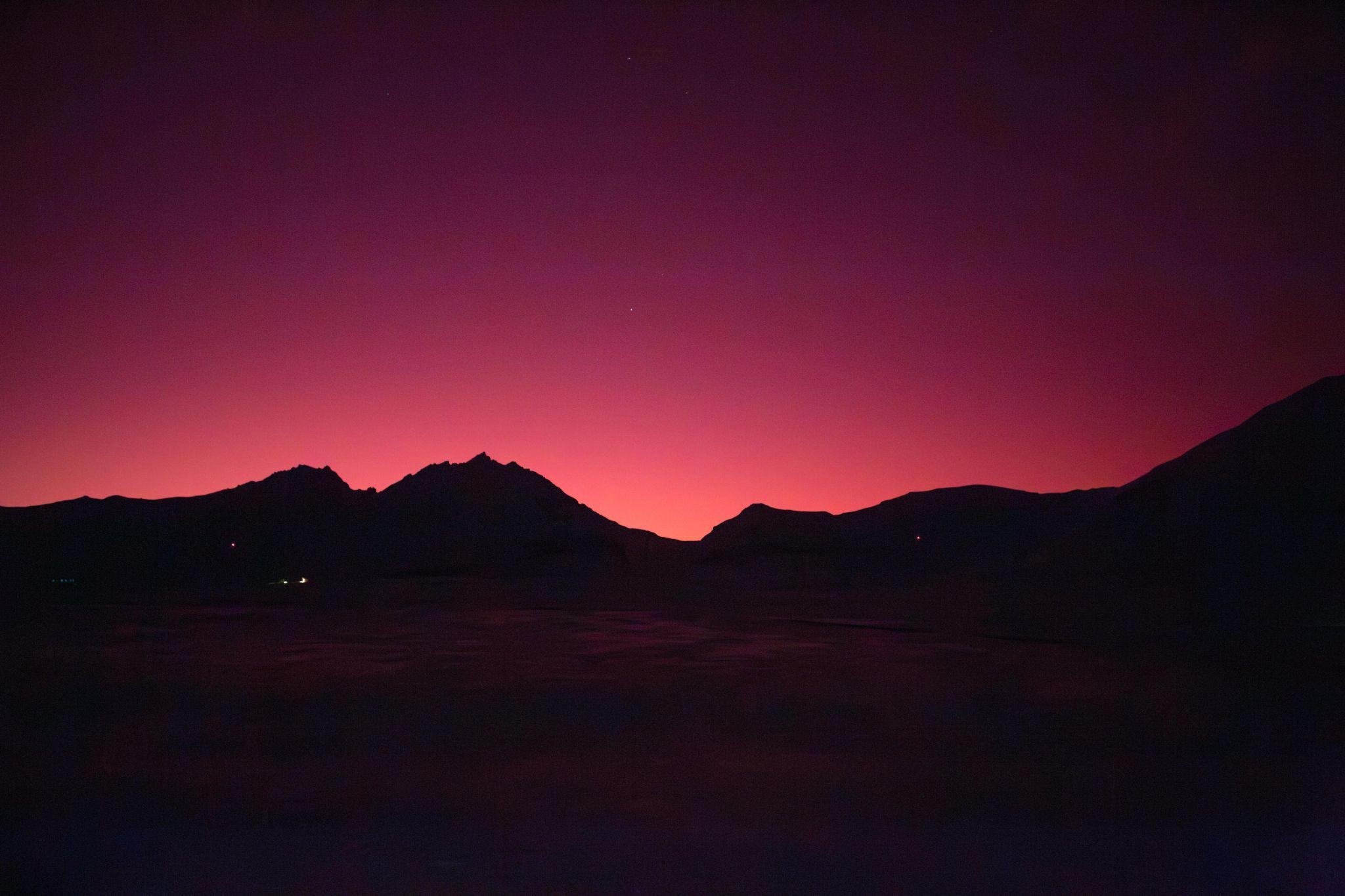
Today, Mika and I are meeting up with Christian Buhren. We met him the other day in an ice cream parlour when it was hailing outside. He went on a research trip to Ny-Ålesund a while back and observed an extraordinary phenomenon in the sky there: an intensely red sky in the middle of the polar night. Naturally, Mika and I were very eager to find out how something like that could happen.
He showed us his photos, and there it was: a red sky in the Arctic. It looked incredible! How on earth is that possible? As we looked at the pictures, Christian explained to us how this phenomenon had come about.
First of all, it has to be extremely cold with temperatures below about −80 °C. Not down here on the ground, though, but high up in the atmosphere, at altitudes between 20 and 30 kilometres. I remember that the stratosphere is already found at that height. Below it lies the troposphere, where our weather happens. Christian said that during his stay there, the temperature in the stratosphere was below −95 °C. Unbelievable! Just thinking about how cold it can be up there made me feel cold all of a sudden. When I looked at Mika, I saw that he was shivering slightly, as if he was feeling cold too.
When temperatures are this low, special clouds can form: polar stratospheric clouds. They consist of many tiny particles, for example ice particles or nitric-acid particles. These clouds form much higher up than normal clouds and can therefore still receive sunlight, even though the sun does not rise above the horizon at ground level.
When the sun is so low below the horizon, its light travels a very long way through the atmosphere. During this journey, blue light is scattered very strongly. What reaches the high atmosphere is therefore mainly reddish, orange or violet light. When this light then hits the tiny particles of the polar stratospheric clouds, it is scattered again and can create an intensely red or violet sky.
This immediately reminded me of sunrises and sunsets. There, too, the sun is close to the horizon and the sky turns orange or red. In the Arctic polar night, however, this effect can be especially impressive, because the sun may not rise above the horizon at the ground, while high up in the stratosphere sunlight can still arrive.
We sat with Christian for quite a while longer, listening intently to his stories. He showed us more pictures from his Arctic adventure. I would never have thought that the atmosphere could be so colourful — even when the sun is not actually rising!
Text & Photos: Christian Buhren, Illustration: Patrizia Schoch