
Are volcanoes cooling the planet?
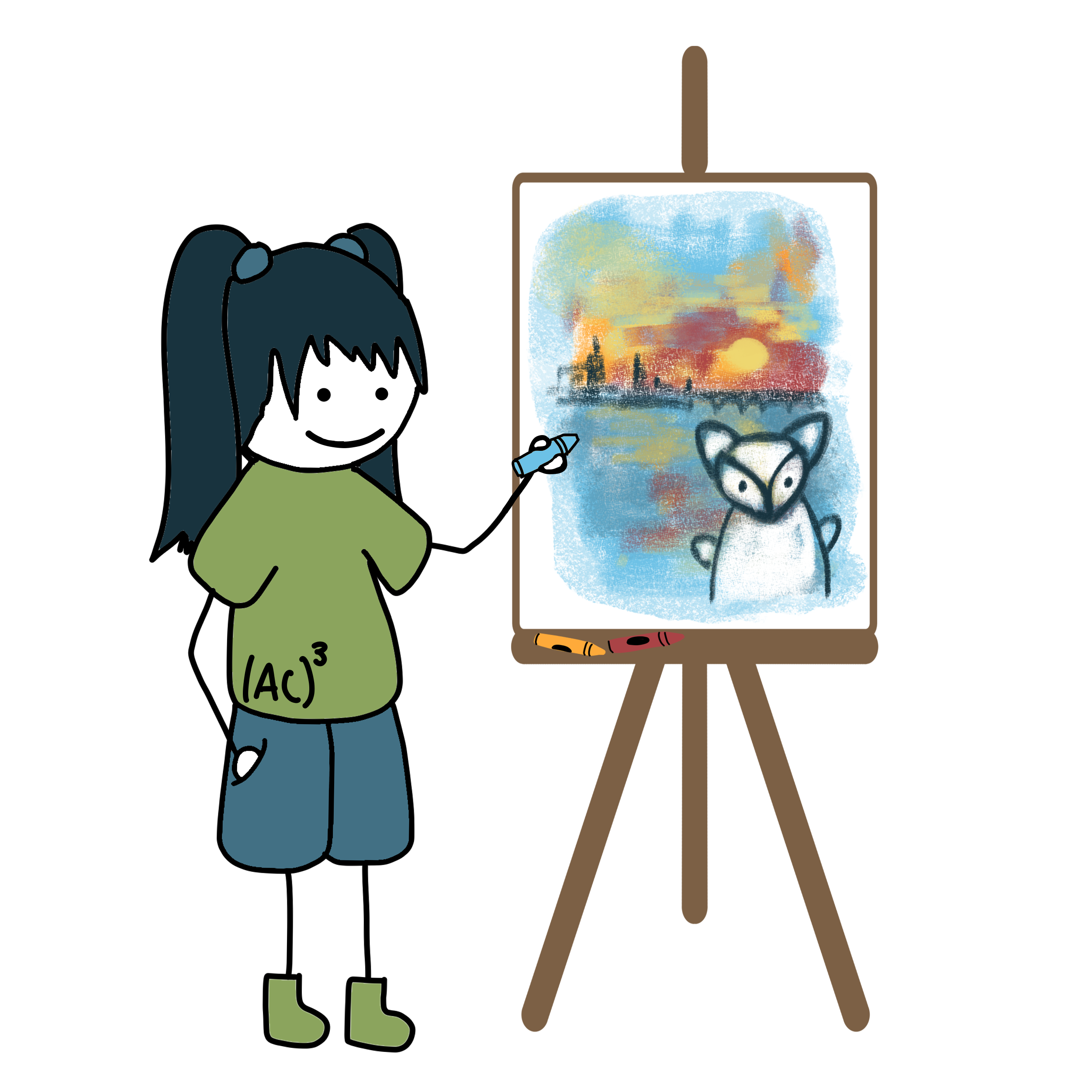
Today in art class, we drew sunsets. I love them, because they can look so different and have sooo many colours. We also talked about famous artists, who drew sunsets. Our teacher told us about William Turner, a famous painter from Great Britain. His drawings of sunsets are very colorful and he used a lot of intense red because he drew sunsets after the Volcano Mt. Tambora erupted in 1815 in Indonesia. Later, Mika and I looked at a globe to find out where Indonesia is and it is a very long way from Europe and consists of several islands between the Indian and Pacific oceans. But how is it possible that a volcanic eruption in Indonesia changed the sunsets in Great Britain?
I asked Charlotte, who researches how volcanic eruptions change the atmosphere of the Earth. She explained that indeed big volcanic eruptions can influence the whole globe, because they emit small particles that can reflect the light from the sun.
In smaller eruptions, these particles are carried only a few kilometres into the air, where clouds are formed. There, they catch the water from the atmosphere and form small water droplets that grow into clouds and in the end raindrops that fall down back to Earth. These smaller eruptions and volcanic plumes can be dangerous for airplanes, that might catch too much of the soot when flying through these plumes or clouds. In 2010 a volcano in Island with the funny name “Eyjafjallajökull” erupted and flights had to be cancelled all over Europe for two weeks. But this did not change sunsets in Indonesia.
“So how could a volcano in Indonesia change sunsets in Europe?”, I asked.
“Well”, Charlotte explained. “The difference between this Islandic volcano and the Indonesian one, was that the Mt. Tambora eruption was so strong that it carried the small particles up to 40 kilometres into the atmosphere. That is like people running a marathon, but upwards into the air. The particles were carried much higher than where the clouds are, to a layer called the stratosphere. This layer is very cold and dry and therefore, the particles cannot grow into heavy rain droplets. Instead, they stay very small and are carried by strong winds further upwards and then to the poles of the Earth, where in the end they fall back down to the Earth. To travel all this way, they need a few months and that is why after a very big eruption near the equator, researchers can detect volcanic particles all over the globe after about half a year. These particles act a bit like tiny mirrors and reflect some of the light of the sun back to space. This can produce these unusual colors in sunsets.”
“So William Turner actually painted a volcano”, Mika wondered.
“In some ways yes”, Charlotte laughed. “And he probably didn’t even know that the volcanic eruption on the other side of the Earth caused the beautiful sunsets he saw.”
“But that is not the only effect volcanic particles have on the Earth. The sun is our source of energy and how much of it we get, decides how warm the Earth’s surface and the air is. Therefore, if the tiny particles reflect some of the sunlight back to space and if they do so all over the globe, it can actually get colder on the Earth. For example, after the Tambora eruption, the Earth cooled down by half a degree.“
“But Charlotte”, I said confused, “half a degree is so little, I wouldn’t even feel it.”
“That’s true”, Charlotte agreed. “But it’s like with climate change. One degree of warming for the whole globe can mean some regions warm far stronger than others. And that is not just for a single day, but for a whole season and even longer. Plants live directly from the sunlight, so they can feel a change in the sunlight much more directly than we can. Actually, after the eruption of Mt. Tambora, Europe experienced a year, which we now call the “year without summer”. That year was much colder and rainier than usual, and the crops could not grow properly. People starved because there wasn’t enough food. This is probably not all connected to the volcanic eruption, because in the years before, wars and political problems also had made life hard for the people. But we think that the eruption of Mt. Tambora might have reduced the harvest and made it overall cooler, so the people struggled even more.
But unlike climate change, the effects of a big volcanic eruption usually only last for 2-3 years, as long as the small particles stay in the stratosphere. Little by little, they fall out of the stratosphere, and then the temperature and sunlight go back to normal. With greenhouse gases, it’s different, because they cannot be simply washed out and stay in the atmosphere for so much longer.”
Lass dir den Beitrag vorlesen
Text: Charlotte Lange, Translation: Charlotte Lange
Illustration: Patrizia Schoch, Publication and Editorial: Sophie Rosenburg
Communication: Beril Aydin, Accessibility: Sophie Vliegen, Social Media: Komal Navale, Website Maintenance: Patrizia Schoch